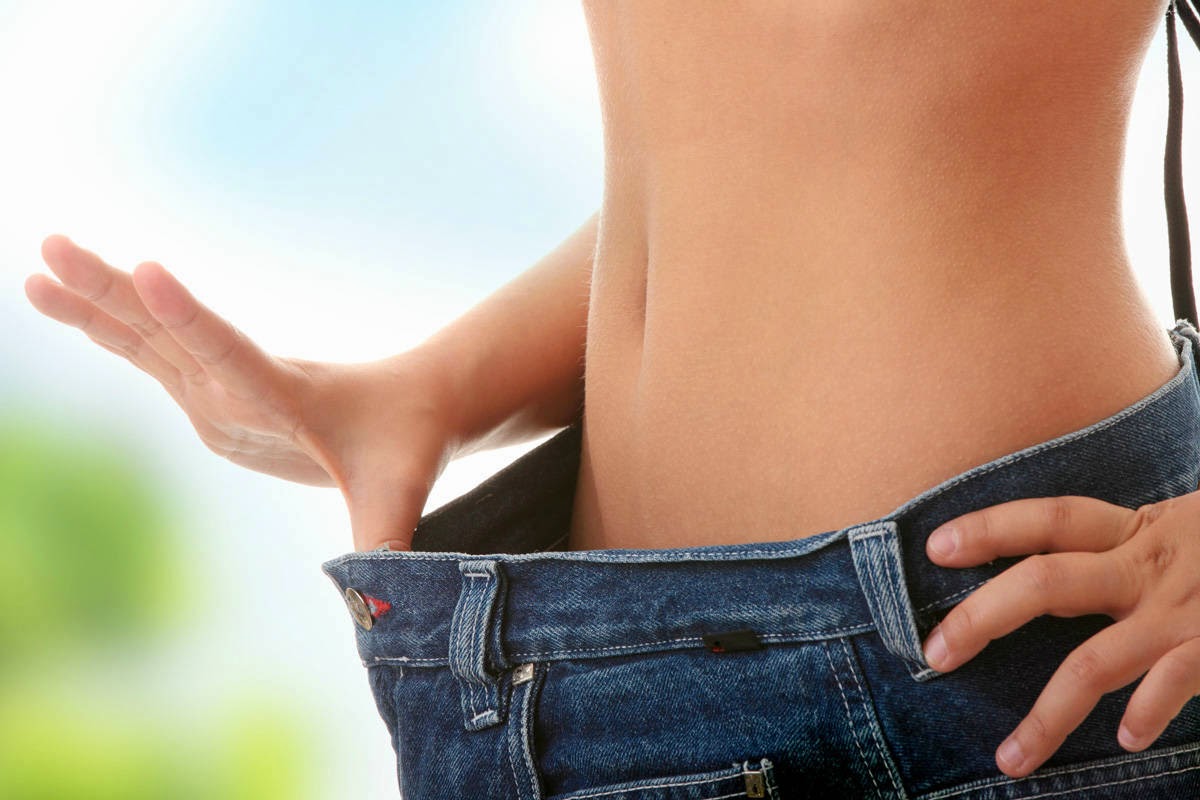
10 Daily-Life Hacks That Blast Belly Fat

Wake Up Earlier

Hitting the snooze button for an extra hour of sleep in the morning may be just as bad for your weight as it is for your job, according to research from the Feinberg School of Medicine at Northwestern University. In the study, people who were exposed to bright light in the morning had a significantly lower BMI than participants who got light exposure later in the day. The shorter wavelengths of the light in the morning have a strong effect on the circadian system, which affects digestion and energy balance. The study authors suggest getting most of your rays between 8 AM and noon.

Change the Color of Your Dinnerware

According to the same study, not only does the size of our plate determine how much we serve ourselves, but so does the color. You'll eat less when the color of your plate contrasts with the color of your food. When party attendees at a luncheon served themselves food that matched the color of their plate—like pasta with Alfredo sauce on a white plate or pasta with tomato sauce on a red plate—they helped themselves to 22 percent more food than diners with plates that contrasted with the color of their food. Don't forget that this same tactic will work if you want to trick yourself into eating more healthy foods—a green plate may be the key to finishing that extra helping of veggies!

Chew Your Food

What you eat is an important part of weight loss, but so is the speed at which you chew it. In a study published in the American Journal of Clinical Nutrition, when 30 men sat down to eat a meal, those who chewed their food 40 times took in 12 percent fewer calories than the men who only chewed 15 times. The number of times you chew correlates directly with hormones that tell the brain when to stop eating.

Take Your Vitamins

Taking a multivitamin every day may help break down fat into usable energy, says a study published in the International Journal of Obesity. When researchers assigned three groups of obese women to take multivitamins, calcium, or placebo pills, the women taking multivitamins had significantly lower BMI and body weight. Another study showed that taking vitamin D supplements can also improve exercise performance.

Prepare Your Own Meals

Don't be tempted by the plethora of delivery options that technology has allowed us. When the American Heart Association studied people who ate two homemade meals per day, they found that homemade meals were associated with less weight gain. If you're worried you won't have enough time to prepare your meals, Margaret Floyd, NTP, founder of EatNakedNow.com, recommends "soup-ifying" (adding leftovers to broth to make a soup or stew) or "salad-ifying" (putting leftovers over a bowl of mixed greens) leftovers for an easy-to-prepare, healthy lunch or dinner. Either way, "when you make your own food, you can control the ingredients and portion size," she says.

Stage Your Kitchen Counter

It's harmless to indulge in a Diet Coke every now and then, but leaving it out in plain sight may cause you to go overboard. Women who leave soft drinks in plain view in their kitchens weigh up to 26 pounds more than those who don't, according to the Cornell Food & Brand Lab. To stay on track with your healthy eating, keep a fruit bowl out on the counter—women with fruit on display weigh 13 pounds less than those who stash their fruit away.

Sleep at a Reasonable Hour

Researchers at the University of California, Berkeley, recently concluded that the time we go to sleep is just as important as getting our recommended eight hours. When they analyzed data from children and adults over a 15-year period, the researchers found that for every hour later a person's bedtime was, their BMI increased by 2.1 points. When we train our bodies to sleep at a later time, it adjusts our circadian rhythm, which regulates metabolic functions.

Believe That You Can Make a Change

The first step to beginning your weight-loss journey is truly believing that you can make a difference in your life. You may think this is corny, but it's true—a study published in Health Education and Behavior showed that individuals who believe that they can control their weight have healthier BMIs, eat better, and go to the gym more often. A positive attitude may be the supplement your diet needs.

Why You're Not Losing Belly Fat


Can't budge the belly fat? If you've been targeting your tummy with little success, it's time to find out if you're sabotaging your efforts. Here are 10 common traps to avoid in the battle of the bulge.

6 Daily Habits That Blast Belly Fat

1 Ditch Diet Soda

How bad can your calorie-free Diet Coke habit be for your belly? Belt-bustingly bad, researchers say. A study in the journal Diabetes Pro found that people who drank two or more diet sodas a day had waist-size increases that were six times greater than non-drinkers. Diet drinks are loaded with deceptively sweet artificial sweeteners, which, researchers say, trick the metabolism into thinking sugar is on its way, spike insulin levels, and shift the body from a fat-burning to a fat-storing state.

2 Eat Three Squares

For years, diet experts beat the “multiple small meals a day” drum—an eating rhythm purported to “stoke the metabolic fire!” Now, some researchers are singing a different tune. A study published in the journal Hepatology found that snacking between meals contributes to increased abdominal fat. Researchers say the findings suggest three balanced meals may be the way to go. Try weaning yourself off the snack wagon by nixing your morning nibble first. Research suggests mid-morning snackers tend to consume more throughout the day than afternoon snackers.

3 Go nuts

Dietary fats are kind of like lovers. Some of them make you a better person, and others—as you often discover too late—are catastrophically bad for your health. The good news is, unlike shoddy boyfriends, dietary fats come with red flags. The absolutely worst match for your apple-shaped figure? Saturated fats. A study published in the journal Diabetes found that while unsaturated fat can help reduce abdominal fat, saturated fat can increase waist size. Saturated fats, like the kind you’ll find in baked goods and red meat, “turn on” certain genes that increase the storage of fat in the belly, researchers say. Polyunsaturated fats on the other hand, activate genes that reduce fat storage and improve insulin metabolism. At about 13 grams per one ounce serving, walnuts are one of the best dietary sources. Sprinkle a handful on your morning oats or entree salad for belly-busting benefits.

4 Skip Bootcamp

Open any fitness magazine, and it’s clear: high intensity interval training (HIIT) is having a bit of a moment. But when it comes to your shrinking your belly, the start-and-stop exercise strategy won’t get you anywhere … other than into a larger pair of pants, researchers say. A study published in the Journal of Obesity found people who performed interval training on an exercise bike for 24 minutes three days a week, actually gained 0.7 percent abdominal fat over a 12-week period. Meanwhile, those on the same dietician-regulated diet, who performed traditional aerobic exercise—45 minutes of continuous moderate cycling three days a week—lost nearly 3 percent of their abdominal fat over the same 3-month period. The study authors did notes that HIIT improved fitness, but suggest that the only evidence to support interval training as an efficient weight loss method was research using young people who were already lean and healthy. Remember: Workouts are only half of the equation. To see the best results, follow these 11 Eating Habits That Will Uncover Your Abs.

5 Make Room for Musical Fruit

There are diet pills on the market that actually work. They’re called beans. Researchers suggest beans, as they’re particularly rich in soluble fiber, can lessen the accumulation of abdominal fat deposits. A study by researchers at Wake Forest Baptist Medical Center found that for every 10-gram increase in soluble fiber eaten per day, visceral fat reduced by 3.7 percent over five years. Fill up, without filling out, with just 1/2 a cup of beans. If the musical fruits tend to leave you bloated, stick to canned varieties that have soaked long enough to break down much of the gas-causing oligosaccharides.

6 Swap Your Cup of Joe for Green Tea

Green tea and weight loss are a natural pair. Sipping on green tea throughout the morning has proven to whittle your waist, but too much coffee has the opposite effect. What makes green tea so waist friendly are compounds called catechins, belly-fat crusaders that blast adipose tissue by revving the metabolism, increasing the release of fat from fat cells (particularly in the belly), and then speeding up the liver’s fat burning capacity. In a recent study, participants who combined a daily habit of 4-5 cups of green tea with a 25-minute sweat session (or 180 minutes a week), lost 2 more pounds than the non tea-drinking exercisers. Meanwhile, a research team in Washington found that the same amount of coffee (5+ cups/day) doubled visceral belly fat. If you're getting tired of green, turn to any of these 5 Best Teas for Weight Loss.

Frozen Treats That Will Help You Slim Down for Summer

Slimming and Refreshing Frozen Treats

To help you achieve a balance of happy and healthy, we rounded up some of the healthiest homemade frozen treats you've ever tried. Simple sliced bananas can be a refreshing way to cool off as well as satiate that sweet tooth. Our mixed berry clusters are the perfect way to snack guilt-free. With recipes for quick summer bites, granitas, and ice pops, all of your frozen cravings will be satisfied even as you slim down for summer!


Applesauce Ice Pops

Nothing says summer like ice pops, and the flavor possibilities are limitless. If you can freeze it, it can become an ice pop! Applesauce ice pops are especially great snacks for both children and adults. Pureéd applesauce works best — it can be thinned out with water, making for a consistency more suitable for freezing. Children love this snack because it puts the familiar — applesauce — on a stick! Adults will love it, too, particularly with the addition of chopped herbs like mint or rosemary for a grown-up spin on a childhood favorite.


Does Red Cabbage Promote Weight Loss?

Calorie Content

    Red cabbage is a low calorie food, with only 22 
calories in a cup of raw shredded cabbage or one-half cup of cooked shredded cabbage. Due to its high water content, it shrinks in volume quite a bit when cooked. Almost all of these calories come from the 5.2 grams of carbohydrates in this serving of cabbage, but you'll also get 1 gram of protein.
Red cabbage is basically fat free.

Energy Density

    Foods low in energy density, like red cabbage, contain very few calories per gram of food. This makes them very filling, because you can eat a large amount without going over your recommended caloric intake. It is the total amount, or volume, of food that makes you feel full, not the amount of calories you eat, according to the Centers for Disease Control and Prevention. If you eat red cabbage at the beginning of the meal, you'll be able to eat a smaller portion of more energy-dense foods like meat later in the meal because you'll likely be less hungry.


5 tips to Burn Off Fat Quickly


1. Set a goal, keeping in mind that losses of no more than 1 to 2 pounds per week are recommended by the Centers for Disease Control and Prevention. Lose 2 pounds in a week by creating a daily deficit of 1,000 calories through a combination of diet and exercise.

2. Eat smaller portions and replace high-calorie foods with low-calories foods. Drink water instead of sugary sodas, and eat fruit or non-fat frozen yogurt instead of ice cream. Consume whole grains, fruits, low-fat dairy, lean protein and vegetables. Include tuna, rolled oats, grapefruit, green tea and hot peppers in your diet as these foods increase your metabolism so you burn more calories, according to Shape.com.

3. Perform 300 minutes of moderate cardiovascular exercise per week, as recommended by the CDC. Cardiovascular exercise, such as a game of doubles tennis, brisk walking, bicycling or water aerobics, will effectively burn calories. If you can talk, but not sing as you exercise, you have achieved the correct pace.


4 Moves to Accomplish Any Fitness Goal

The Moves


Squat
Stand with feet hip-width apart and shoulder blades tucked back and down (imagine trying to tuck them into back pockets). Push hips back and bend knees until thighs are parallel with the floor, keeping chest up, weight in heels, and knees tracking over middle toes. Push through heels to stand back up.

Tip: Lead the movement with your hips by imagining that you’re pushing a door open behind you with your butt.

Bent-Over Row
Stand with feet shoulder-width apart. Hold dumbbells in front of thighs, palms facing body. Push hips back and bend forward until back is parallel to the floor, letting the dumbbells hang downward and maintaining a flat back. Pull dumbbells to sides of torso, then lower them to starting position.

Tip: As with the squat, lead the move with your hips by imagining that you’re pushing a door open behind you with your butt.


8 Mistakes Healthy People Make

You always buy organic

Buying organic is wise for certain foods, such as beef or strawberries, but it doesn't make much difference for others, like avocados or eggs.

And don't assume that all organic foods are healthier than non-organic options, or that organic equals healthy. Organic choices are usually pricier, for one thing. And organic high-calorie, high-fat granola bars and sugary cereals are just as bad for you as the non-organic version.

You don't socialize enough

While you may feel virtuous on your long solo runs, don't forget to check in with your pals once in a while. Studies suggest that social networks are good for your health too.

Try to schedule regular meet-ups with friends, whether it's a book club or poker—it doesn't matter. (No need to make it exercise-based, although that's nice too.)

Just connecting with other people, and maintaining those social networks as you age, is good for your health.


You skimp on sleep

Think it's a good idea to get up at 5 a.m. and hit the gym? Not if you should be sleeping instead, says Gary Rogg, MD, a primary care physician and assistant professor at Montefiore Medical Center in the Bronx, N.Y. Studies have consistently shown that people need at least seven hours of sleep a night for optimal health, and short sleep has been associated with a host of health problems, including high blood pressure, depression, diabetes, and a reduced immune response to vaccines.


You lack supplement savvy

More is not better when it comes to vitamins and supplements, and too much of a good thing can actually be harmful.

In 2011, an analysis of data on nearly 40,000 women found that those who took dietary supplements especially iron were actually at slightly higher risk of dying, although the investigators weren't sure why. "There's no really long-term studies that show unequivocal benefits of taking vitamin and mineral supplements,"


You beg for antibiotics

Many people ask their doctor for a prescription for antibiotics or antivirals for symptoms that probably would resolve on their own, or just because they fear getting sick.

And some doctors may oblige. But these drugs also carry risks, from contributing to the huge problem of drug resistance to killing off the good bacteria in your body. Let your doctor decide if your symptoms warrant medication, and skip the high-pressure tactics.


You're a germaphobe

We all know people who never leave the house without their hand sanitizer—you may even be that person. And yes, you should wash your hands with soap and water to kill germs that can make you sick.

But evidence also suggests that some germ exposure could steer the immune system away from allergies, and that an overly sterile environment might be bad. (It's called the hygiene hypothesis.) Good bacteria are also key for staying healthy, particularly for the skin, digestive tract, and vagina. So "fear of germs" does not equal "good health."


You use exercise alone to shed pounds

Regular exercise is crucial for health and maintaining a healthy weight, but it won't help you lose weight unless you cut down your calorie intake.

"Patients exercise themselves until they're blue in the face, they're frustrated, they're sort of at a loss as to why they haven't had success," says Shantanu Nundy, MD, a primary care physician at the University of Chicago. But the truth is that exercise maybe because it whets the appetite, maybe because we decide it's OK to reward ourselves with a treat after that workout, maybe both—often makes people eat more, which means you'll make up for the calories you just burned, and then some.

6 Foods Surprisingly High in Protein

Lentils

In addition to 18 grams of protein per cup (cooked), this legume offers 16 grams of fiber (nearly two-thirds of your daily need); more than a third of your daily iron requirement; and 90 percent of your daily folate needs. Lentils are also high in B vitamins, which help your body convert food into energy.


Whole Wheat Pasta

Swap regular pasta for the whole wheat kind. While 8 grams of protein is roughly the same amount white pasta offers, whole wheat has more fiber and is a good source of B vitamins.

Wheat Berries

You already know grains like quinoa are high in protein, but have you tried wheat berries? The versatile whole grain is a favorite for breakfast, lunch or dinner, plus it packs 6 grams of protein per quarter cup (dry). Similar grains like kamut, farro, and buckwheat groats all contain roughly the same amount of protein.


Peanut Butter

Peanut butter and other nut butters (like almond or cashew) have the same protein level as the nuts they come from by weight. In this case, that means 2 tablespoons of peanut butter have 8 grams of protein.


Peas (Green—Not Snow or Snap)

These little guys pack a protein punch—8 grams of protein per cup (raw) in addition to 7 grams of fiber per cup. Raw peas also cover your daily vitamin C intake and nearly half of your daily vitamin K intake.


Broccoli

Here's a good reason to eat your broccoli: It contains 3 grams of protein per cup (raw), all of your daily vitamin C and K intake, and 8 percent of your daily potassium intake.

9 Reasons to Reach Your Weight-Loss Goals

Your Heart Will Be Stronger

Excess fat around your heart or lining your blood vessels makes blood flow difficult and increases your risk of a heart attack. "Every 5 point increase in BMI increases mortality from cardiovascular events and diseases 30 percent," says Peeke. But as you lose weight, blood flow becomes easier, lowering your risk of heart disease.


You'll Reduce Your Risk of Diabetes

"If you eat an unhealthy diet, and you're lucky, you just keep making insulin as you need it, and you keep getting heavier and heavier," says Roxanne Sukol, MD, a specialist in Preventive Medicine for Cleveland Clinic Wellness Institute. "But when you can't quite make enough insulin to catch all that sugar, then your sugars stay a little too high, a little too long, floating around in your blood steam waiting for more insulin." Eventually, your body can't make enough insulin, causing diabetes. "But start eating a healthier diet (unprocessed foods high in fiber) and you'll reduce your insulin load and risk of diabetes," says Sukol. "And when you do, your pants will fit better, too."

You'll Reduce Your Risk of Cancer

 Being obese increases your risk of at least seven types of cancer: bowel, breast, gall bladder, kidney, pancreatic, throat, and uterine. In fact, your risk of developing one of these cancers is approximately 40 percent higher than if you maintained a healthy weight, according to Cancer Research UK. The reason? That same chronic inflammation we mentioned before.


You'll Sleep Better

 Weight loss lessened the severity of obstructive sleep apnea (a sleep disorder characterized by the stopping and starting of breathing) in a study published in Sleep. "Once you drop enough weight, you'll notice changes in the ability to breathe easier," says Peeke. (Belly fat pushes your diaphragm up, decreasing lung volume.)


You'll Boost Fertility

Wanna be a mom? Women with BMIs between 35 and 40 have a 23 to 43 percent decreased chance of getting pregnant compared to women whose BMI is 29, according to Peeke. Not to mention, being overweight during pregnancy increases your risk of gestational diabetes and preeclampsia—and your child's risk of heart disease later in life, according to research presented at the American Heart Association 2014 Scientific Sessions in Chicago. "Don't consider getting pregnant until you're at a healthy weight," says Peeke.


You May Live Longer

 "A grand majority of researchers found that being 80 pounds overweight can shorten your life expectancy by 10-plus years," says Peeke. "And 14-plus years if you're 100 pounds overweight."


You'll Have a Better Quality of Life

 A healthy weight doesn't just increase the amount of years you're on this earth—it makes you better able to enjoy them. "Forty to fifty pounds of excess weight can rob you of two decades of healthy life," says Peeke. That means two decades of doctor's appointments, medical treatments, living with pain, and being out of breath—instead of, say, running around outside with your kids.

How the Hunger Scale Can Help You Lose Weight

I'm famished! I'm starving! I'm going to pass out I'm so hungry! Ignoring hunger and getting to the point where you're so ravenous you could eat the entire refrigerator is not good on many levels. Aside from the headaches, dizziness, and stomach pangs that go along with waiting too long to eat, it also makes you eat tons more than you would if you were just moderately hungry, and that my famished friends, can cause weight gain.

Hunger is important for weight loss - it signals your body when it's time for your next meal or snack. But for everyone's sake, you want to avoid getting hangry. So how to you gauge how much hunger is OK? Nutritionists Stephanie Clarke, RD, and Willow Jarosh, RD, of C&J Nutrition recommend using the hunger scale.

"It's a scale from one to 10, with one being your absolute hungriest, feeling light-headed level, five being completely neutral (not hungry and not at all full), and 10 being really uncomfortably stuffed. You want to grab a snack or meal at about a three, when you're moderately hungry, and stop eating around a six, just past that completely neutral feeling."

1: Starving, famished, dizzy, headache

3: Hungry, growling belly

5: Comfortable, light, neutral feeling

6: Satisfied

8: Extremely full, tired from eating too much

10: So stuffed you feel sick

Basically you want to develop a personalized eating schedule where you eat when fairly hungry (if you waited another hour, you'd be famished) and eat just enough to feel satisfied and be hungry again three to four hours later. This way of being mindful of your hunger, using a hunger scale, is a great way to monitor what and how much goes in your mouth. Keep the numbers in mind every time you're about to reach for something to eat.

 Think to yourself, "What number am I?" and it should help curb those unnecessary noshings when you're not actually hungry and will also prevent you from getting past the point of hunger to where you want to order an entire pizza for lunch.

5 Rules of Rapid Fat Loss

1 Burn More Calories Than You Eat

Weight loss is simple: if you burn more calories than you consume, you’ll drop pounds. Sure, where your calories come from matters, but at the most basic level, even if you're eating too much healthy food, you still won't lose weight. Too many people underestimate how much they eat and overestimate how many calories they burn. Avoid the guesswork and keep a food journal for a week. Count up exactly how many calories you’re averaging. You may be surprised.

Now start eating 250 fewer calories per day. You'll be surprised how easy this is to do when you measure portion sizes. Any junk or processed food you’re eating should be the first to go. If you can, try burning 250 additional calories each day. Combined, these two changes will stoke your fat-burning fire.

2 Eat More Protein

Of all the foods you eat, the high-protein ones are the most important for losing fat for three reasons: they keep you feeling full, which prevents overeating and snacking; they boost your calorie burn throughout the day because protein takes more energy to digest than either carbs or fat; and, when paired with weight training, a high-protein diet prevents muscle loss.

Eat at least one gram of protein per pound of your body weight from whole, lean sources like lean meats, eggs, fish and plant-based protein powders.


3 Eat More Healthy Fats

Fat is not the enemy, it just has a bad reputation. Healthy fats like coconut oil, nuts and avocados will keep you full hours after you meal, which stops you from diving into your stash of unhealthy snacks.

Eat more healthy fats and cut back on carbs, which can spike blood sugar and elevate your insulin levels, leading to more fat storage. Get at least 25% of your calories from good sources of fat and avoid artificial trans fats, which have been linked to numerous health problems like heart disease. Make sure you read those packages, though! Anywhere you can point to the word "hydrogenated" in an ingredients list means the snack includes trans fats, even if the package says it has none.


4 Get Stronger

Too many people log mile after mile on the treadmill without even glancing at the weights. While cardio can help you burn a few calories, it does nothing to develop the muscles underneath your fat, the ones that boost your resting metabolism. Too much cardio along with a caloric deficit can also cause you to lose muscle and make you weaker.

Here's the thing it may be hard to understand: Even when your goal is to be smaller, you still need to lift heavy and build strength. No, ladies, you won't build bulky muscles, we promise. Heavy weights help improving your body composition so that when you do get smaller, you're also toned. Each week, train using big exercises like squats, deadlifts and presses for sets of 4–8 reps.


5 Sleep at Least 7 Hours a Night


Cutting back on sleep increases levels of cortisol, a stress hormone, which causes fat storage. In fact, shorter amounts of sleep were associated with higher BMI levels and larger waistlines in men, Japanese researchers found when they conducted a study of more than 6,000 participants. Sleep deprivation also interferes with recovery, so you won't be able to workout as hard the next time you hit the gym.

Get at least seven hours of uninterrupted sleep every night. If you have trouble sleeping, stop drinking caffeine after midday, limit your alcohol consumption (which ruins sleep quality) and create a pre-bed ritual to get your body and mind ready for sleep (that doesn't include backlit devises like your TV or tablet).

How to Lose Belly Fat

If you hate the treadmill, we've got good news for you: Minute per minute, weight training fights belly fat better than cardio does, according to new research published in Obesity.


For the study, researchers with the Harvard School of Public Health (HSPH) examined the physical activity, waist circumference, and body weight of 10,500 healthy men who participated in the Health Professionals
Follow-Up Study from 1996 to 2008.

Over the study's 12 years, the guys who spent 20 minutes a day weight training (lifting free weights, working on weight machines, and performing body-weight strength moves) had a smaller increase in age-related abdominal fat compared with men who completed moderate-to-vigorous aerobic exercise for the same amount of time—even though those who performed aerobic exercise actually lost more weight than the lifters did.

That's right: Weight training is the trick when it comes to losing belly fat. Unlike aerobic exercise, which burns both fat and muscle, weight lifting burns fat while building muscle, says lead author Rania Mekary, PhD, a researcher with the HSPH. That's a vital combination when it comes to blasting belly fat, which tends to increase with age and is linked to diabetes and heart disease.

"Weight training reverses exactly what happens as we age—losing muscle mass and gaining fat," she says.

Plus, by increasing your metabolic rate in both the 48 hours after exercise and over the long term, weight training does a double whammy on belly fat, she says. And as women's bodies naturally have less muscle and more fat compared to men's, strength training may be even more important for keeping female bellies flat.
Still, that doesn't mean you should skip the treadmill altogether, says Mekary, who notes that the study participants who combined aerobic and strength training enjoyed the best results.

Her best advice on how to lose belly fat? Perform aerobic exercises like running, biking, or swimming one to two times a week, and resistance train at least three times a week. (Each session only needs to be 25 minutes, including a post-workout stretch.)

And as far as the weight training exercises you need to hit, just mix it up so that you hit all of your major muscle groups each week, says Mekary. If you want to perform total-body circuits every day or would rather schedule a leg day, arm day, and core day, it's up to you.

3 Mental Tricks to Overcome Any Running Hurdle

Have a No-Sweat Mindset


Elite athletes visualize getting over any speed bumps before they even hit the starting line. Flip your dread for those hills ahead by envisioning yourself powering up them with ease, Statler says.


Divide and Conquer


Studies show that the average runner goes longer and stronger when distracted from the effort. "Focus on something repetitive, like counting the number of people you pass. Or dedicate each mile or marker to a pal or a loved one," Statler says.

Make it a Race Day


Just the mere presence of other people or spectators can make you push harder—that's the social facilitation theory—but Statler suggests you can conjure those vibes even when you run solo. "Pick or even imagine another runner ahead of you and race to pass them," she says. "If you feel yourself flagging at the end, picture yourself holding the baton and bringing home the anchor leg as crowds cheer."

The Fastest Way To Lose Weight In 3 Weeks

http://db27c9mclino4y80-1qdl8pp7e.hop.clickbank.net/

Losing weight in a short space of time has always been thought of as a near impossible task. For years, doctors and dieticians have told the public that it takes months and sometimes even years of hard work to see any progress with weight loss, or to sculpt the perfect body. But that is simply not true at all.

The human body is highly adaptable and able to change in extremely short periods of time. Think about. If people can quickly gain mass amounts of fat from weeks of unhealthy eating, shouldn’t they be able to lose a lot weight rapidly from weeks of healthy eating? Well, they definitely can.

But what do you need to eat to lose the weight rapidly? From low-carb, to low-fat, to sugar-free, to high protein, and even the ‘caveman’ diet – there are so many options out there that it can be extremely confusing to the average person on which diet you should use to quickly lose weight. Some of these diets even provide conflicting information on what you should and shouldn’t eat. Well, that’s all about to change.

For years, A-list celebrities and professional athletes have been following a secret diet not revealed to the public. This diet is so effective that people have been able to lose over 23 pounds of pure body fat in just 21 days from following it. That’s more than 1 pound of body fat per day! Now, that diet has been made public by acclaimed nutritionist and personal trainer Brian Flatt.

Titled ‘The 3 Week Diet’, Brian’s system reveals to people exactly how they can rapidly lose over 1 pound of body weight per day. The diet doesn’t involve starving yourself or exercising like crazy, but instead follows a specific scientific method of including certain nutrient rich foods into your diet that, when combined, offer special fat-combating properties. You don’t need to restrict yourself to certain types of foods like ‘no carbs’ or ‘no sugar’, but rather include ‘the good stuff’ as well to help burn the fat. This diet is extremely effective and based off years of scientific research and testing to ensure its safety and effectiveness.

Brian has revealed step-by-step how to follow this diet for 21 days to see these amazing results. He has laid out every food you need to include in your diet, and when you need to eat them. The diet is incredibly easy to follow, with very little work involved. If you are looking to lose weight fast, The 3 Week Diet is definitely something you should consider. No other diet out there today promises such fast results, and is able to deliver them too.

Visit The 3 Week Diet website to before and after photos of people who have followed the diet for 21 days. You too, can see similar results in as little as 2 days if you start right now!    The 3 Week Diet now!

4 Secrets to Long-Lasting Weight Loss

Know Your Vices

Schiavocampo started struggling with her weight in childhood and considers herself a food addict—with flour as her crack. So now she avoids temptations like pizza and doughnuts altogether. "I learned that for me, I could not eat certain foods in moderation, ever," she says. "I know many other people share the same problem." Complete elimination of foods you love is hard—and could backfire—but if you want to give it a try: "Set a small goal, like a week," Schiavocampo says. "Once you've reached it, set another one. Over time, your habits will change and you'll have fewer cravings for your poisons."


Have Fun, and Work Hard

In the past, exercise meant going through the motions and barely breaking a sweat for Schiavocampo. But while getting back in shape after having her daughter, she discovered SoulCycle and Barry's Bootcamp and started to enjoy herself while working out, even though she was doing killer workouts. Once she starting seeing results (muscle tone! energy!), her goal shifted from getting thin to getting fit.
And don't let the low percentage for exercise in her formula fool you. Schiavocampo works out most days—but tells herself that it has nothing to do with her weight loss. The mental trick helps her in two ways: "For one, it keeps me from eating back what I've burned off, because I'm not factoring it in," she says. "It also forces me to focus on the other benefits of exercise, like stress release, energy and fun!"

Plan Ahead

Each night, Schiavocampo plans out what she's going to eat the next day and when she's going to work out, and packs her gym bag. It's also helpful to think about any obstacles that are standing in your way, she advises, and schedule around them. "If grabbing after-work cocktails with your girlfriends always throws you off track, you may need to give that up and start meeting them for breakfast instead," she says. Or a workout! (Here's why working out is the new going out.)

Make Sleep a Priority

Don't get caught up in the idea that sleep deprivation is a badge of honor that proves how important or busy you are. After reading research about how not sleeping enough could derail weight-loss efforts, Schiavocampo put sleep on her list and made it a priority. The trick: Instead of feeling lazy or guilty about sleeping, give yourself permission to get as much as you need, she advises.

How to Follow a Vegan Diet Plan Without Feeling Deprived

Eat One New Vegetable a Week

It can be easy to fall into a rut of relying on broccoli and carrots, but bringing new veggies into your cooking routine will keep things interesting. Hit up your local farmers' market to seek out something you haven't tried and ask the farmer his favorite way to prepare it.


Eat Vegetables for Breakfast

That's right. Newbie vegans can see breakfast as a major hurdle, giving up staples like scrambled eggs, yogurt, and bacon. To change up your morning meal, Mark Bittman, New York Times food columnist and author of the VB6 Cookbook, reaches for sweet potatoes. "Tell me why sweet potatoes haven't become popular for breakfast, really the most dessertlike meal of the day," he writes. He nukes them in the microwave until tender, 10 to 15 minutes, then slits open and tops with warm maple syrup tossed with some chopped walnuts.

Rethink Your Fruit Salad

Aside from being one of the most virtuous fruits on the planet, avocados offer a satiating combo of fiber and protein, so you'll feel fuller longer. Dice them, add to a bowl, and start experimenting with different ingredients — scallions, sesame seeds, sriracha, lime or lemon juice, radish and red onion — to come up with a delicious topping for toast or a side salad.

Swap Out Cheese for Nuts

When cheese is there to deliver depth to a recipe (and not an ooey-gooey texture), swap in nuts. One sauce this works well with is pesto — and no, Parmesan is not necessary! Vegan blogger Aine Carlin, author of the forthcoming Keep It Vegan, uses a delicious mix of 3/4 cup pistachios and 1/2 cup walnuts to make up for the cheese. Nuts also work well in place of cheese when garnishing a salad, pasta, or stir-fry. Quick tip: Toast them for more flavor by placing them in a dry skillet over low heat until golden.

Make Your Own Nut Milk

We promise it'll taste better than the store-bought kind (and it'll only take you 20 minutes). Follow Bittman's easy recipe: Put 1 cup nuts in a blender with 2 cups boiling water. Pulse on and off (to prevent the hot water from spurting), then hold the top tightly and blend 15 seconds. Let steep 15 minutes, then strain (preferably through a cheesecloth), squeezing out as much as milk as possible. Store in a jar in the refrigerator up to one week.

Master a Tasty Sauce

Day after day, veggie-centric dishes can start to feel blah. The key is to change how they're seasoned and dressed. Katie Parker, author of the new The High-Protein Vegetarian Cookbook, keeps things interesting with a sweet-salty sauce: Whisk together 1/4 cup reduced-sodium soy sauce; 1 1/2 tablespoons peanut butter; 1 tablespoon each brown sugar, honey, and tomato paste; 1 teaspoon rice vinegar; and a pinch crushed red pepper flakes.
 

Broil Your Tofu

Broiling is an overlooked method for prepping food, especially tofu, but it will take on a nice roasted flavor and texture in less time than traditional roasting. Slice a block of firm tofu (silken won't hold up with the heat) crosswise about an inch thick and broil until golden.

DIY Whipped Cream

Coconut milk adds texture to stir-fries and soups, but you can also use it in dairy-free whipped cream. Refrigerate a can of full-fat coconut milk overnight. (Make sure it's a brand without guar gum). Open the can and spoon out only the thick layer of coconut cream on top (not the liquid). Place the cream in the bowl of stand mixer and beat away. Stir in a dash of vanilla extract and a sprinkling of salt.

Best Weight Loss Exercise

1. Running

Running (treadmill or outdoors) – the best weight loss exercise. Running is one of the most efficient methods of burning calories. For every mile you run, you burn approx. 100 calories. Highest calorie burn and cheap as chips. All you need is a pair of quality running shoes. Plus, if you stick with it, you’ll get hooked, making weight loss and weight maintenance easy. Check out a beginners running plan and how to run to get started.
2. Elliptical Trainer
If you can’t run this is an awesome piece of machinery. The elliptical trainer combines the cardio of running with resistance and it is low impact. Another positive is that burning the equivalent amount of calories as running feels easier on the elliptical. Great weight loss exercise. Compare the elliptical trainer with the treadmill.


3. Cross-Country Skiing
Cross-country skiing (machine or outdoors) is a fantastic endurance sport, calling on every major muscle group. Again it is a combination of resistance and cardio exercise. If you’ve got snow I suggest you ski.
4. Rowing
Cardio and resistance training in one fierce calorie-burning workout lasting between 20 and 40 minutes. Best used for interval training. Just make sure most of your power driving the stroke comes from large muscle of the thighs – not the upper body (a common mistake).
5. Step Aerobics
Step Aerobics targets legs, hips and glutes. It is an intense calorie-burning exercise. Calories burned during this weight loss exercise depends on speed and step height.
6. Bicycling
Bicycling (stationary or outdoors) targets thighs and calf muscles. Effectiveness for weight loss depends on speed and resistance/ incline. However, pear-shaped women beware of high resistance, as this will increase muscle mass in your thighs and exacerbate your problem area.
7. Swimming
Swimming – excellent full-body weight loss exercise. Water supports the body. Thus, less stress is placed on joints – low-impact. Brilliant for those with injuries.
8. Jumping Rope
Jumping rope is a seriously simple, but effective weight loss exercise. Ten minutes of jumping rope burns the rough equivalent of running an eight-minute mile. This weight loss exercise also improves cardiovascular endurance, coordination and agility.
9. Racquetball/ Squash
The high-intensity makes racquetball a great weight loss exercise.
10. Rock Climbing
Rock climbing is a weight loss exercise that combines cardiovascular exercise with resistance training. This weight loss exercise burns A LOT of calories, esp. on the way up.

10 Ways to Lose Weight Fast

Swap your go-to order

"I used to eat out at restaurants up to nine times a week! By cutting back to just once a week and ordering a grilled chicken salad instead of a large bowl of pasta.


Skip the salty aisle

"I reached my goal weight after I stopped routinely buying snacks at the grocery store. If I wanted a bag of chips or a candy bar, I had to walk to the store to get it. That inconvenience usually made me ignore my cravings.


 Have a 300-calorie breakfast

"I used to skip breakfast, but now I never go without. I always eat about 300 calories of a healthy mix of protein and whole grains. My go-to meal: a sandwich with natural peanut butter and apple butter. It keeps my hunger down so I snack less throughout the day.

Get fit in five

"I try to fit in small bouts of exercise whenever possible, like doing jumping jacks or crunches during television commercials or dancing while washing dishes. This burns extra calories and keeps me from mindlessly munching in front of the TV. Now my clothes fit way better, and I’m more toned than ever

Kick the habit

"I quit smoking, and right away joined a gym and started working out with a personal trainer. There was no way I could exercise and feel healthy if I kept lighting up.

Do a purge

"I totally cleaned out my pantry. Once I replaced the foods I used to overindulge in, like ice cream, with lower-cal snacks, such as roasted sunflower seeds or Special K Chocolatey Delight cereal, I began making better choices automatically.

Healthy up your happy hour

"After work, my colleagues and I always grabbed dinner—and it was usually deep-fried. Then we changed things up. Instead of nights out, we started walking and running around a local track

Get fired up

"I loaded my iPod with jams that make me look forward to going to the gym. They energize me, allowing me to pick up speed on the elliptical—and because I want to hear my entire playlist, my workouts are longer now.

Pile on the veggies

"By adding vegetables to the foods I love—like eating pizza topped with arugula and green peppers instead of pepperoni—I became so full so quickly that I no longer had room to eat things like chips or super-rich desserts.

Run your butt off

"When I wanted to fit into my skinny jeans again, I started running 20 minutes a day during my lunch hour. In two months, I've lost 20 pounds, have tons of energy, and just finished my first 5K.

5 Dos and Don’ts for Weight Loss Motivation

Don’t: Beat Yourself Up


In my experience, one of the main triggers of throwing in the towel is negative self-talk. Coming down hard on yourself for small indiscretions, like sneaking an extra square of dark chocolate, or taking a bite off your partner’s plate, can have damaging consequences, including emotional eating, or engaging in risky purging behaviors (e.g. compensating by undereating, overexercising, taking laxatives or diet pills, vomiting…). One exercise I often carry out with my clients is to compare how they talk to themselves to what they would say to their best friend if he or she were in the same circumstances.

The comparisons are eye opening, and the objective is to consciously work on adopting the same kind of nurturing, caring, and encouraging dialogue you use with the people you respect and love with yourself. I’ve seen just this one change result in major shifts in motivation, as well as transitions from on again/off again yo-yoing to steady, sustainable strides. In other words, just committing to being nice to yourself has the power to transform your relationship with food, your body, and your health.


Do: Celebrate Every Success


Most of my clients want to reward themselves when they hit their weight goal, perhaps with new clothes, a trip, or a spa service. But I encourage them not to wait. When you’re working on changing your lifestyle, there are numerous victories along the way, and each one should be honored. One client recently told me that it dawned on her that she automatically reaches for water over diet soda, and no longer misses her former daily fix—that’s a huge win! Another shared that her kids are now asking for fruits and veggies. A third remarked that everyone’s been commenting on how radiant her skin looks.

Even if you’re still pounds away from your weight goal, revel in these achievements, and commemorate them, even if just in small ways, like buying flowers for your office or home, doing a happy dance in your living room, or taking a silly selfie to share with a friend. Recognizing these moments will keep you going, and it’s important to recognize that they’re really the foundation of your long-term success.

Don’t: Focus Solely on Your Weight


One of the reasons the “do” above is so important is that it creates a shift in perspective. When I’ve worked with clients who remain laser focused on weight, they’re often willing to compromise health for the sake of weight loss. For example, I’ve had really smart clients tell me they took up smoking, fully knowing the risks, as a means of losing weight.

As a health professional that makes me very sad, and it’s one of the reasons why I talk to clients about things like mood, sleep quality, energy, immunity, digestive health, strength, endurance, and help them monitor health indicators like blood pressure, cholesterol, and liver values. I generally find that over time, all of these factors that contribute to wellness, become much stronger motivators than weight or size, because they so strongly influence day to day quality of life. When this happens, you may even decide to banish the scale altogether, which is incredibly freeing, because you’ll have far better—and less fickle—ways of gauging your progress.

Do: Find Positive Support


I hate to say it, but most of my clients have at least one person in their lives who either consciously or unconsciously sabotages their healthy efforts. It may be a significant other who doesn’t want to lose his or her partner in crime, so in turn brings home a box of donuts or a piping hot pizza. Sometimes it’s a competitive co-worker who becomes critical, or a family member who says things like, “You don’t need to lose weight.” A lack of support, even from those you’re close to, is a common conundrum for most people who’ve adopted healthier habits.

You may not be able to change this, but you can counterbalance it by finding positive support. Even if your cheerleader or confidant is online or long-distance, just having at least one person in your corner who really gets what you’re trying to do and is on the same page can help you stay on track. Spending a little time each day on social media can also help (check out my previous blog about how), as long as it’s empowering, so find ways to connect that make you feel like you’re not in this alone.

Don’t: Set Unrealistic Expectations


One of the biggest pitfalls I see is setting unrealistic expectations, either results-wise (e.g. I’m going to lose 30 pounds in 30 days), or behavior wise, such as vowing to work out seven days a week, or cut out all carbs. On the flip side, the lasting transformations I see—that is, people who lose weight healthfully and keep it off for good—come from focusing on progress and consistency, not strictness or perfection. You know yourself better than anyone else. If you can’t realistically see yourself maintaining a goal you’ve set for yourself one, three, or six months from now, modify it.

When I ask my clients about their weight history, most tell me they’ve lost and gained back the same 20 or so pounds over and over again. And what finally allows them to shed it for good is ditching any approach they know that can’t stick with!